Foundries are extremely important areas in terms of industrial development and the establishment of modern life. Despite this, many people have little to no knowledge about foundries. Many of the metal parts in your daily life are manufactured in foundries.
Foundries are facilities where metals are heated to very high temperatures, the resulting molten material is poured into molds, and then left to solidify. A wide variety of parts can be produced in foundries. Although many people think that only metal products such as pipes or engines are manufactured, in fact, anything that contains metal components can be produced in foundries. These foundries may be located within large factories or operated as smaller production workshops.
The casting process of a product can be quite labor-intensive. All factors such as the dimensions, shape, composition, and similar characteristics of the product affect the casting process.
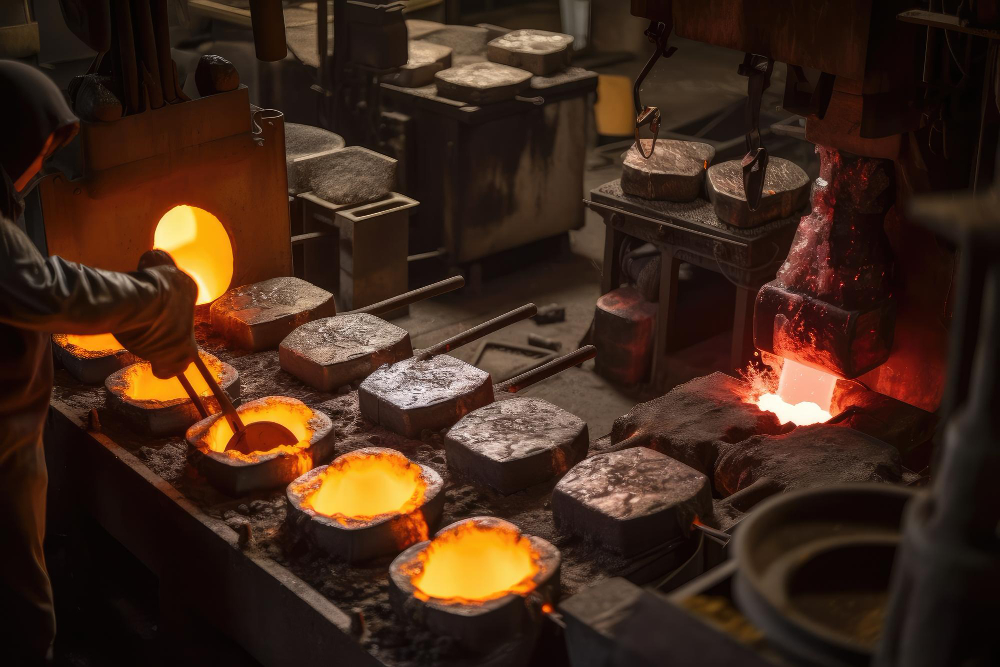
In foundries, there are many different stages involved in producing a product. These stages can generally be described as molding, melting, pouring, injection, cleaning, heat treatment, and inspection. The process of melting the metal into a liquid state and the mold into which this liquid is poured give the metal its final shape. The most commonly used mold material is silica sand. With this material, various products can be manufactured depending on the casting metal and the method used.
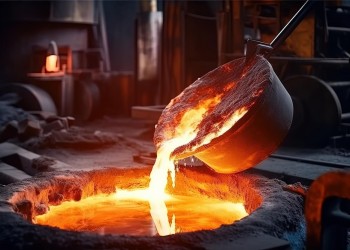
First, the melting furnace in the foundry is filled with metal and heated above its melting point. The molten metal reaches a specific pouring temperature. It is then removed from the furnace using a steel ladle lined with refractory material. Afterward, if there are any impurities or slag, they are skimmed from the surface of the molten metal. The ladle is then tilted to pour the molten metal into a mold cavity.
As the mold cools, the metal begins to solidify. After this process, the casting is removed from the mold and cleaned. The cleaned casting undergoes a fettling process to ensure it meets the required dimensions. During this process, excess material is removed from the casting. Depending on the characteristics of the casting, the duration and complexity of the heat treatment process may vary. Some casting processes are faster and simpler, while others can be much more detailed and challenging depending on the desired material. Once completed, the castings are inspected after the cleaning process, and the order is delivered.
In foundries, a series of processes such as part design, prototyping, assembly, and tooling can be carried out. A modern foundry is heavily mechanized. Different foundries can produce different materials. When you want to have a mold made, you should choose a foundry that has equipment capable of melting the materials required for your desired parts.
One of the most commonly used methods in foundries is sand casting. Sand casting is generally used to produce large parts from materials such as iron, bronze, aluminum, and brass.
The molten metal is poured into a natural or synthetic sand mold cavity that has been prepared in advance. The sand cavity is created using a wooden or metal pattern that is almost an exact replica of the part. In some cases, metal may also be used for these patterns.
One of the most widely used methods in foundries is sand mold casting. Due to its very low costs and its ability to be easily applied to parts of various sizes, sand mold casting is the most preferred option. In sand mold casting, coating can be applied either manually or with the help of machines.
During casting, gravity is generally utilized, and mass production of cast parts can be achieved. With the sand mold casting method, parts ranging from a few grams to up to 400 tons can be cast.
In foundries, the drawings of parts received for manufacturing must be read correctly and molds must be created accurately. In order to produce a sound casting, dimensions must be exact and technological rules must be strictly followed.
The model to be produced should be designed in a way that allows it to be manufactured simply and quickly. The model can be molded by hand or by machine. However, especially in manual molding processes, it is extremely important that the personnel are experienced and specialized in this field.
Proper mold removal ensures that the molten metal flows into the mold easily and without defects. In addition, the mold must be designed in such a way that no slag or air cavities remain.
At ERG Group Foundry, in addition to the machines, fans, pumps, and various other materials we manufacture, production is also carried out according to customer demand.
You can bring us your designed projects and have their castings produced by our expert staff using modern equipment. In this way, you can manufacture both your prototypes and mass-production products accurately and with high quality. You can contact us to obtain detailed information about the products you can manufacture in our foundry and about pricing.