






OUR DOCUMENTS
Details on our quality policies and production standards.
View
Working in underground environments is much more challenging and demanding than standard industrial conditions on the surface. Factors such as confined spaces, limited oxygen, and heat can create serious risks if not properly managed. For this reason, underground ventilation systems are not just a comfort element but a critical infrastructure directly linked to occupational safety and operational efficiency.
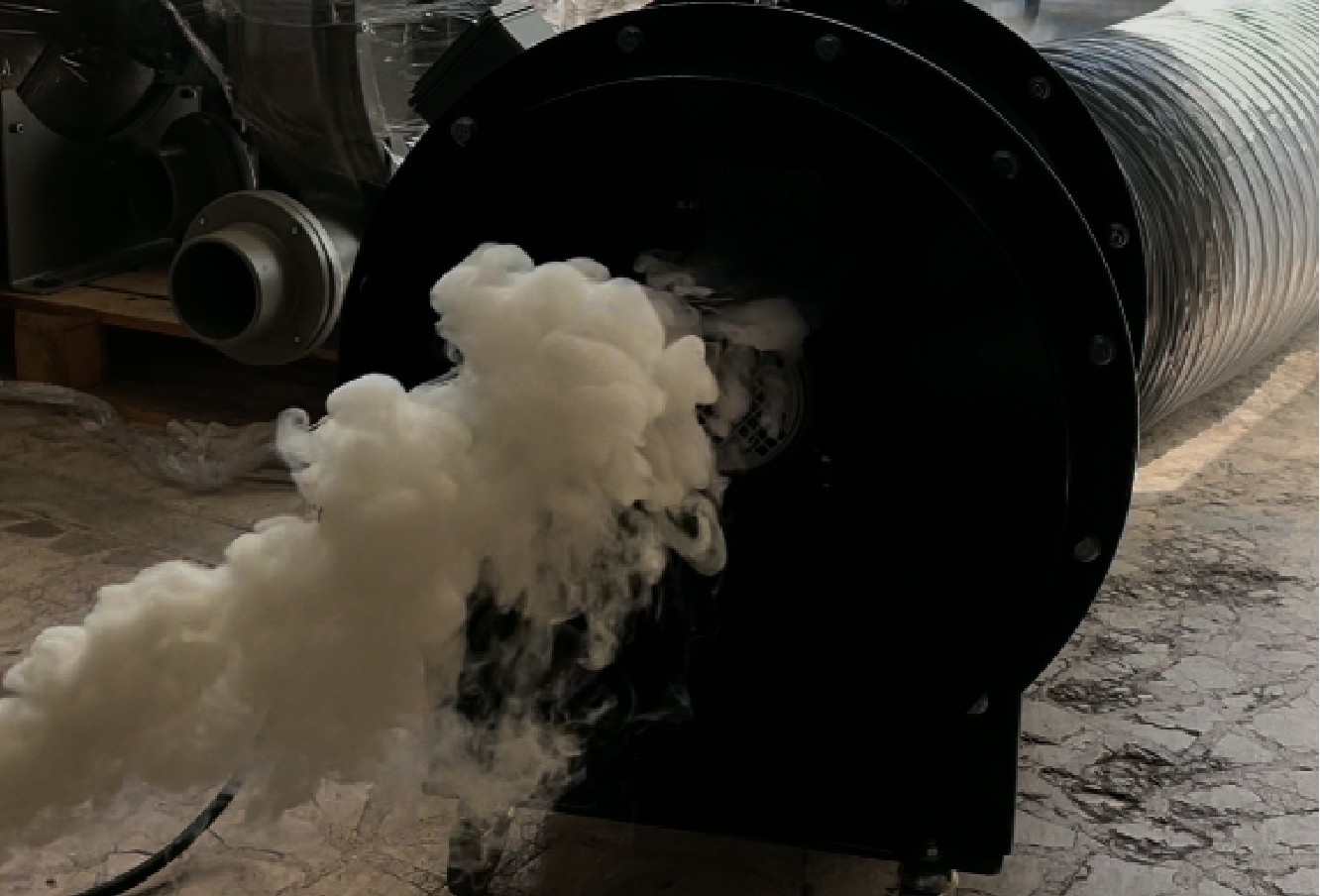
In underground working areas, air quality plays a vital role in the sustainability of production. An effective ventilation system performs multiple critical functions simultaneously. At this point, the main functions of mine ventilation can be listed as follows:
In underground areas, natural air circulation is almost nonexistent. Therefore, a continuous supply of fresh air from outside is required. If adequate oxygen levels are not maintained, both employee performance decreases and distraction increases, leading to more accidents. For this reason, a strong underground ventilation infrastructure ensures that the environment is constantly supplied with fresh air. Thus, worker safety is directly supported.
One of the biggest risks in mining environments is the formation of toxic air. Gases such as methane and carbon monoxide can accumulate unnoticed and lead to fatal consequences. An effective mine ventilation system ensures that these gases are rapidly removed from the environment. This is not only a matter of safety but also forms the basis of legal requirements.
Methane gas can become explosive when it reaches certain levels. If ventilation is insufficient, the risk increases exponentially. Properly designed industrial ventilation systems:
For all these reasons, ventilation systems are at the center of occupational safety systems.
If continuous airflow cannot be maintained in underground operations, production comes to a halt. This results in serious time and cost losses. Therefore, a ventilation system is an extremely important investment not only for safety but also for operational continuity.
The heart of a system is the fans used. A properly selected mine ventilation fan ensures that the entire system operates efficiently. Underground and mine ventilation fans:
The primary function of fans is to create controlled air movement within a confined space. Without this airflow, clean air cannot enter and contaminated air cannot exit.
In a well-designed system, clean and contaminated air circulation do not mix. With the help of fans, air is directed to create a controlled and balanced cycle. This structure is critical for both employee health and system efficiency.
Airflow in underground environments must be continuous. Therefore, the selected fans must be suitable for long-term operation, provide stable performance, and have a durable structure. An incorrect fan selection at this point can cause the entire system to operate inefficiently.
Underground and mine ventilation projects are not the same. Therefore, the type of fan used varies depending on the need. The most common fan types can be examined as follows:
Axial fan models move air along the fan axis. The most well-known advantages of axial fans are:
Radial fan models push air from the center outward. The general advantages of radial fans are:
Jet fans are used to support air movement in specific areas. Understanding the advantages of jet fans is quite important. Here are the advantages:
Jet fans that provide these advantages are generally preferred to support the main system and are considered efficient air movement supporters in the areas where they are used.
Fan selection is not just about purchasing a product but also about building a solution. Therefore, it is very important to pay attention to certain technical details when choosing a fan. Here are the key considerations:
Capacity and Project Requirements: First, the required airflow rate must be calculated correctly. Insufficient capacity will cause the system to fail from the beginning.
Gallery Length and Air Resistance: Air resistance increases over long distances. This creates the need for more powerful fans. Fans selected without this calculation will be insufficient and will not deliver the desired results.
Environmental Conditions and Durability: Underground environments can be humid, dusty, and abrasive. Therefore, the selected fan must be resistant to these conditions. Otherwise, non-durable equipment may fail in a short time and create serious costs for the operation.
In underground and mine ventilation, having a solution partner that can operate effectively in the field is as important as theoretical knowledge. Because each project is unique. At this point, ERF Group stands out with its engineering-based approach and perspective.
ERF Group does not only offer products. It also develops customized underground ventilation system solutions based on specific needs. Key advantages include:
Based on all this information, if you want to create a safe working environment, ensure uninterrupted operations, and invest in long-lasting systems, you can contact ERF Group to learn more about high-performance underground and mine ventilation solutions and obtain the most suitable fan systems for long-term use.
With ERF Group’s efficiency and quality, you can achieve effective air circulation in both mining and underground ventilation systems, protect employee health, select the right fans for your project, provide localized airflow, generate high pressure, and maintain high energy efficiency.
In short, with professionally designed underground and mine ventilation systems, you can gain advantages in every aspect.


