






OUR DOCUMENTS
Details on our quality policies and production standards.
View
The use of jet fans in the car parks of modern buildings stands out as an effective solution for ensuring safe and efficient air circulation. Particularly in enclosed car park ventilation projects, these systems make a significant contribution to controlling exhaust gases and directing smoke in the event of a fire. A properly designed car park jet fan system can therefore improve user safety while also providing important operational advantages.
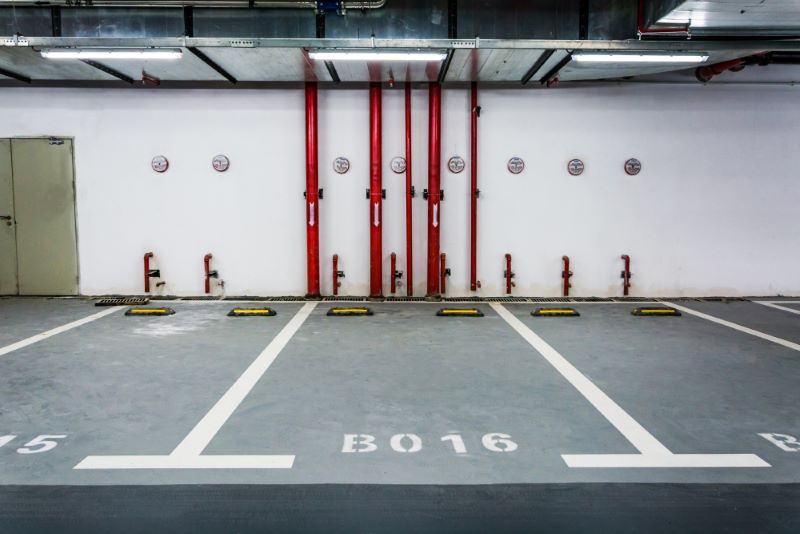
In enclosed car parks, carbon monoxide, nitrogen oxides, and other harmful gases generated by vehicles must be kept below specified levels. Ventilation systems designed for this purpose allow fresh air to enter the area while contaminated air is discharged in a controlled manner.
These systems generally consist of gas detectors, exhaust fans, fresh air fans, and equipment that directs airflow in the most effective way. Fan operating speeds can be adjusted automatically according to data received from sensors. This allows the system to operate at high capacity only when necessary, helping to optimize energy consumption.
In fire scenarios, the system switches to a different operating mode. During the enclosed car park smoke extraction process, smoke is directed toward exhaust points in a controlled manner. This helps keep evacuation routes visible for longer periods and supports safer intervention by firefighting teams.
Jet fans push airflow in a specific direction, helping contaminated air reach designated exhaust points. By creating controlled air movement throughout the car park, they help prevent harmful gases from accumulating in specific areas.
Another important function of jet fans is to support air quality by enabling exhaust gases to be transported more evenly throughout the car park. This helps achieve more uniform ventilation across different areas of the system.
In the event of a fire, jet fans also help prevent smoke from spreading uncontrollably. By directing smoke toward a predetermined extraction route, they support the protection of areas such as safe escape corridors.
At the same time, proper airflow direction improves the overall performance of the ventilation system and enables more controlled operation under different usage scenarios. For this reason, jet fan car park ventilation solutions are widely preferred in many projects today.
When determining the system to be used in a project, the total area of the car park and the number of floors are among the primary evaluation criteria. Proper airflow planning becomes increasingly important in large and multi-storey car parks. Vehicle capacity and traffic density are also key factors in system selection. In areas with high vehicle traffic, solutions capable of providing more effective air circulation are generally preferred.
Fire regulations, relevant standards, and performance criteria directly influence the design process. Ensuring that the system complies with all applicable legal requirements is essential from a safety perspective. Since column layouts, ceiling height, architectural configuration, and the positioning of air extraction points can all affect airflow, the system should be designed by taking these factors into consideration.
Energy efficiency expectations, automation infrastructure, and maintenance planning are also among the important factors considered during the system selection process.
The use of jet fans provides significant advantages, particularly in enclosed car parks. The main benefits of jet fan systems in enclosed car park applications can be explained as follows:
Using jet fans to direct airflow can significantly reduce the need for long and large air ducts. This helps simplify the system design and makes installation more practical.
By reducing the amount of ductwork required, more usable space can be preserved within the car park. This contributes to more efficient planning of parking spaces and more effective use of the available area.
Systems that can adapt more easily to architectural layouts provide greater flexibility across different building types. They can be particularly advantageous in projects with dense column layouts, where they offer greater design freedom.
Systems integrated with gas sensors operate at high capacity only when required. This operating principle helps reduce energy consumption while supporting better control of operating costs.
Thanks to a simpler system structure, maintenance and inspection procedures can be carried out more efficiently. Regular maintenance helps preserve system performance while also contributing to a longer service life for the equipment.


