






OUR DOCUMENTS
Details on our quality policies and production standards.
View
Ventilation equipment used in power generation facilities is critically important in terms of system safety, process continuity, and energy efficiency. Selecting the correct power plant fan requires criteria such as airflow, fan pressure, temperature resistance, and operating environment conditions to be evaluated together in accordance with process requirements. For this reason, industrial fan selection should be carried out not only with a capacity-focused approach, but also with an engineering approach that takes the operating conditions of the facility into consideration.
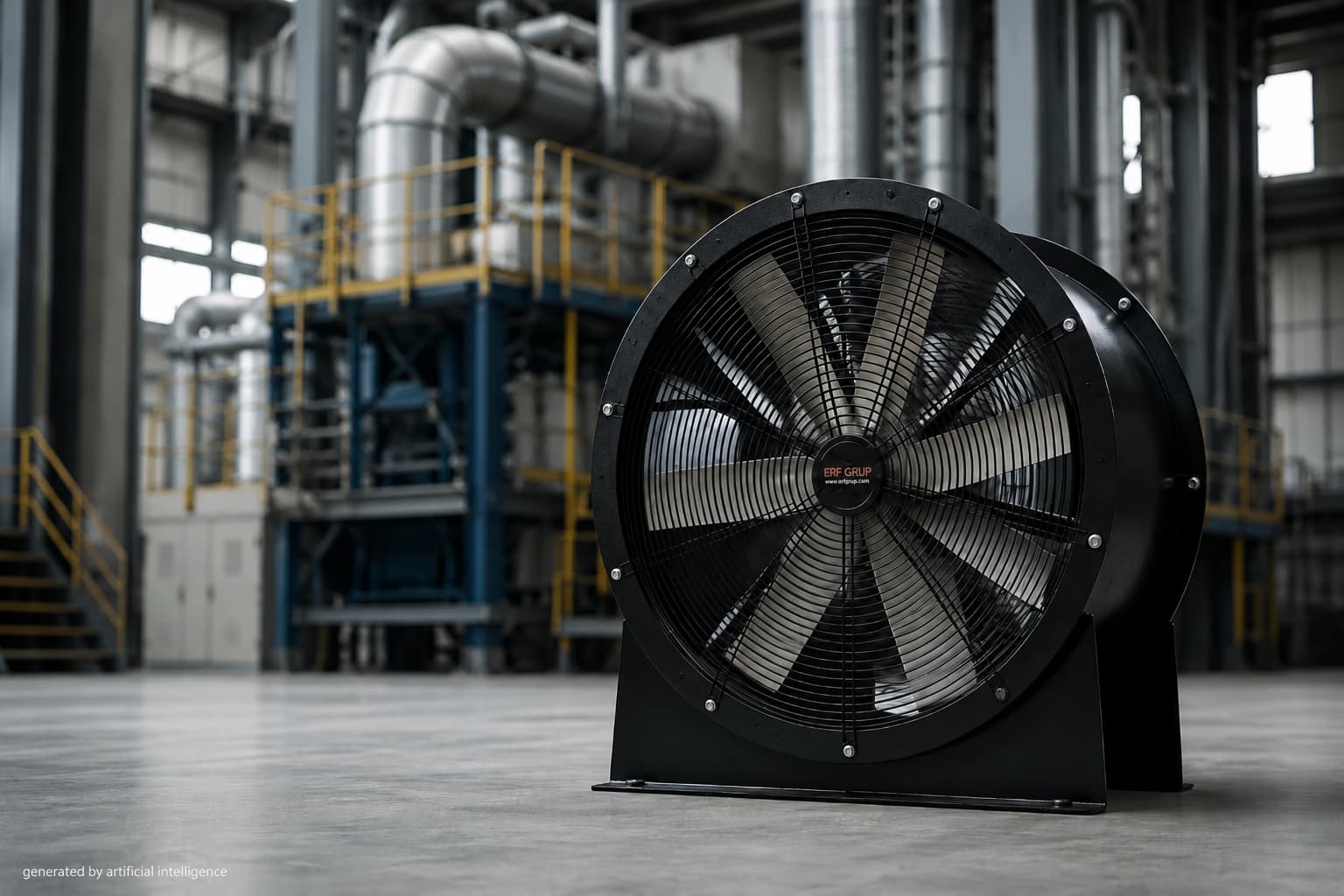
Fans used in power plants are among the important components of systems designed for continuous operation. Ensuring that the selected power plant fan model is suitable for operating conditions helps the equipment operate for a long service life and reduces maintenance costs. Process conditions, temperature, environmental characteristics, and the properties of the air being handled are among the determining criteria in fan selection.
Different processes in power plants operate at different temperature levels. Solutions resistant to high temperatures should be preferred in boiler systems, flue gas applications, and process ventilation lines. Therefore, when selecting a high-temperature fan, both the operating temperature and the amount of air required by the process should be evaluated together.
Proper fan selection prevents performance loss under high-temperature conditions while also extending the service life of the equipment. Particularly in process ventilation applications, carrying out engineering calculations in accordance with temperature values is important for safe operation.
In power plants where coal, biomass, and various fuels are used, the air may contain high levels of dust and particles. This condition may cause wear on fan blades and may also lead to performance losses.
Therefore, when selecting a fan for an industrial ventilation system, the amount of particles in the air to be handled should be taken into consideration, and wear-resistant housing and impeller structures should be preferred. At this point, properly designed fans contribute to operational continuity by extending maintenance intervals.
In some power generation processes, flue gases, chemical vapors, or corrosive gases may commonly be encountered. In such applications, systems with material properties suitable for the operating environment should be preferred instead of standard fans.
Fan design suitable for corrosive environments requires the housing, impeller, and connection components to be manufactured from appropriate materials. In this way, safe operation is ensured while the service life of the equipment can also be significantly increased.
The process structure of each power plant is different. Therefore, industrial fan selection should be carried out through project-specific engineering calculations rather than a standard product approach. A properly calculated fan system reduces energy consumption while also increasing operational efficiency.
Airflow and Static Pressure Calculation: One of the most important criteria in fan selection is accurately determining the required airflow and fan pressure values. Fans with insufficient capacity may fail to provide adequate airflow properly, while fans with excessive capacity may cause unnecessary energy consumption. Therefore, accurate calculations should be made by taking duct length, filter resistance, process equipment, and system losses into consideration. Properly determined fan capacity ensures stable and efficient system operation.
Motor Power and Energy Efficiency: Since fans in power plants operate continuously for a large part of the day, motor efficiency is an important cost factor. Selecting appropriate motor power can help prevent unnecessary electricity consumption. In addition, systems offering high fan efficiency not only reduce energy costs but also significantly reduce maintenance requirements.
Fan Housing and Impeller Material Selection: The physical and chemical characteristics of the environment in which the fan will be used play an important role in determining housing and impeller materials. In applications involving high temperatures, abrasive particles, or corrosive gases, appropriate material selection directly affects the operating life of the fan. In short, proper material selection reduces the risk of deformation while enabling performance to be maintained over a long period.
The type of fan to be used in power plants should be determined according to the requirements of the process. Within the scope of ERF Group’s production solutions, industrial fan options are available for different applications.
Axial fan models are preferred in applications where high airflow is required. They provide effective air circulation in boiler rooms, machine rooms, general ventilation systems, and cooling areas. Thanks to their ability to generate high airflow at low pressure, they offer efficient solutions for ventilating large-volume areas.
Radial fans are used in processes requiring high fan pressure. They provide reliable performance in filtration systems, flue gas transport, and process air transfer applications. Due to their ability to generate high pressure, they are frequently preferred under the challenging operating conditions of power plants.
Cabinet fan systems are used in industrial applications where high airflow is required. Thanks to their modular structures, they can be designed according to different capacity requirements. In power plants, they are preferred for ventilating large-volume process areas and for high-capacity air transfer applications.
An incorrectly selected fan may negatively affect not only equipment performance but also the entire production process. Insufficient capacity, incorrect pressure values, or unsuitable material selection may lead to increased energy consumption, unplanned downtime, and higher maintenance costs. Therefore, working with an experienced industrial fan manufacturer is highly important in power plant projects. At the same time, properly determined fan solutions based on project-specific engineering calculations improve the return on investment by providing high performance, long equipment life, and lower operating costs.


