Duct fans are used in ventilation systems where air needs to be moved through or within a duct network. At ERF Group, we provide duct fan solutions suitable for different duct cross-sections, airflow requirements and system pressure conditions.
The primary function of a duct fan is to support and maintain airflow through the duct system according to the fan’s operating capacity. For this reason, motor power alone should not be used as the main selection criterion.
The required airflow, duct length, fittings and the resistance created by other system components should all be evaluated together when selecting a duct fan. The pressure generated by the fan is also critical for maintaining airflow throughout the system. Duct dimensions, total duct length, elbows, dampers, filters and other fittings can create resistance to airflow. As this resistance increases, the pressure required from the fan may also increase.
For this reason, duct fans should not be evaluated only according to whether they can provide a certain airflow rate. The selected fan should be capable of delivering the required airflow and pressure at the actual operating point of the ventilation system.
| Duct System Component | Effect on Fan Selection | Project Consideration |
|---|---|---|
| Elbows | May increase airflow resistance | Number and geometry of elbows |
| Dampers | May create additional pressure loss | Opening position and operating condition |
| Filters | Resistance may change as filters become contaminated | Filter type and maintenance interval |
| Grilles | May create resistance at air outlets | Quantity and dimensions |
| Duct length | Affects total friction loss | Total route length |
| Duct cross-section | Affects air velocity and system resistance | Width, height or diameter |
The fan casing must be physically and technically compatible with the duct cross-section. Whether the duct is round, square or rectangular directly affects the fan connection type, installation arrangement and product dimensions.
Round duct fans are used in applications where the fan needs to be connected to circular air ducts.
If the fan connection diameter does not match the duct diameter, additional adapters may be required during installation. This may also introduce unnecessary airflow losses within the system.
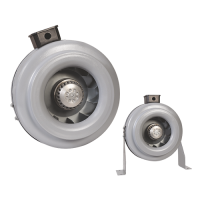
ERF Group’s DTYF model is designed for circular duct applications and features an external rotor motor. According to its product configuration, both connection ends are designed to match the duct diameter, and the fan can operate in different mounting positions.
When determining the duct diameter, the physical connection size should not be considered alone. The required airflow and air velocity within the duct should also be evaluated.
Selecting the duct diameter according to the actual system requirement helps establish a more suitable fan operating point.
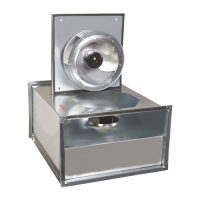
Square and rectangular duct fans are integrated into ventilation systems that use square or rectangular air ducts.
In these applications, the fan’s external dimensions, duct cross-section and available installation space should be checked together.
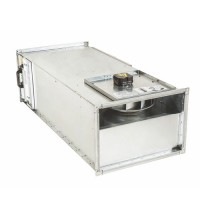
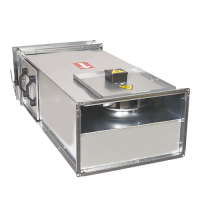
DTDR and DTDF are designed for rectangular duct applications. DTDR features an external motor configuration, while DTDF is a backward-curved, low-blade-density rectangular duct fan.
Both models can be installed directly within the duct line, which can support installation planning in applications where available space is limited.
When selecting a rectangular duct fan, duct width and height should not be considered in isolation. The total airflow requirement of the system must also be taken into account.
A larger duct cross-section does not automatically indicate that a higher-capacity fan is required. The required airflow should be determined according to the project calculation.
Fan positioning within the duct system should be planned according to airflow direction, service accessibility and connection geometry. The fan should remain accessible for inspection and maintenance, particularly in continuously operating ventilation systems.
Components located immediately upstream or downstream of the fan can also affect operating conditions. Elbows, dampers, transitions or reductions positioned too close to the fan may alter the airflow profile.
For this reason, fan placement should not be determined solely by whether the unit physically fits within the available space.
Airflow performance in duct fan systems is influenced by several factors, including airflow rate, pressure, duct geometry, duct length, fittings and the aerodynamic characteristics of the fan itself. Motor power is only one element of this overall system.
Airflow refers to the volume of air that the ventilation system needs to transport within a given period. However, the fan must be able to deliver this airflow at the required system pressure. For example, if the duct network includes filters, multiple elbows or a long duct route, the resistance that the fan must overcome may increase.
Pressure loss is one of the main factors that directly affects the operating point of the fan. As friction losses and local resistance within the duct system increase, the fan may require a higher pressure capacity to maintain the same airflow.
| Design Variable | Possible Effect | Evaluation Method |
|---|---|---|
| Duct diameter | May change air velocity and friction conditions | Duct calculation |
| Duct length | May increase or reduce total friction loss | Route calculation |
| Number of elbows | May increase local pressure losses | Fitting calculation |
| Filter condition | Pressure loss may change over time | Periodic inspection |
| Fan speed | Changes airflow and pressure operating point | Fan control |
| Air characteristics | May affect material and motor selection | Environmental assessment |
Connection and installation requirements should be determined according to the casing design of the fan and the geometry of the duct system.
DTYF is designed for circular duct applications. Its connection ends are suitable for round duct installation, and the fan can operate in different mounting positions. DTDR and DTDF are designed for rectangular duct systems and can be installed directly within the duct line.
Depending on the model, galvanized sheet metal may be used for the casing, while aluminium or galvanized sheet metal can be used for the impeller. Installation methods should therefore be selected according to the materials and construction of the fan.
In addition to duct dimensions, sufficient service and maintenance clearance should be provided during installation. In systems containing filters or other serviceable components, planning the required access area in advance can simplify maintenance during operation.
At ERF Group, duct fan selection is evaluated according to the airflow requirement, system pressure, duct geometry and installation conditions of each project.
Instead of applying a single fan model to every ventilation system, we focus on the actual operating conditions of the duct network.
DTDR is an externally driven fan model designed for rectangular duct systems with medium- to high-volume ventilation requirements.
Its backward-curved, low-blade-density impeller configuration and aerodynamic design are key factors in the operating characteristics of this industrial duct fan.
DTDF is a backward-curved, low-blade-density fan model designed for medium- and high-volume ventilation applications in rectangular duct systems.
Its aerodynamic structure plays an important role in airflow behaviour and overall fan performance.
DTYF is an external rotor motor fan designed for circular duct systems.
Its backward-curved, low-blade-density impeller configuration makes it suitable for applications where controlled airflow and relatively low noise levels are required.
| Model | Duct Cross-Section | Key Structural Feature | Main Selection Consideration |
|---|---|---|---|
| DTDR | Rectangular | External motor, service access panel | Air volume, temperature and maintenance access |
| DTDF | Rectangular | Backward-curved low-blade-density impeller | Duct dimensions and operating point |
| DTYF | Circular | External rotor motor | Duct diameter and airflow-pressure relationship |
Duct fan prices are not determined solely by fan diameter or motor power.
Fan capacity, pressure requirement, casing structure, motor type, duct cross-section and project-specific manufacturing requirements can all affect pricing.
A fan designed for a circular duct system and a fan intended for a large rectangular duct network may have significantly different technical configurations and therefore cannot be priced according to the same criteria.
Additional requirements such as filters, special materials, alternative motor configurations or custom product dimensions may also affect the scope of the quotation. For this reason, when comparing duct fan prices, it is important to evaluate not only the product price but also whether the fan can provide the required airflow and pressure under the actual operating conditions of the system.
ERF Group offers duct fan solutions such as DTDR, DTDF and DTYF for different duct geometries and ventilation requirements.
When evaluating a fan requirement, we consider parameters such as duct length, system pressure, operating temperature and the characteristics of the conveyed air. For smaller or different applications, duct dimensions, connection type and required airflow can also be used as part of the selection process.
When selecting an industrial duct fan, you can provide the duct diameter or cross-sectional dimensions, required airflow and, where available, system pressure information to support technical evaluation and product selection.
Contact ERF Group for technical assessment and product selection support for your duct ventilation project.
Depending on the model, duct fans can be connected to round, square or rectangular duct systems.
The connection size should be compatible with the duct to support correct installation and airflow through the ventilation system.
Yes. As duct length increases, total friction-related pressure loss may also increase.
Pressure loss can be caused by duct friction, elbows, dampers, filters, grilles and other fittings within the duct network.
Yes. Duct fans can be used in exhaust systems when the required airflow, pressure and operating conditions are suitable for the selected fan.
The duct diameter, fan connection dimensions and overall external dimensions of the fan should be checked.
The impeller, motor, connections, cleanliness of the fan and general operating conditions should be inspected as part of routine maintenance.
Fan capacity, pressure requirement, motor configuration, dimensions, materials and custom manufacturing requirements can affect duct fan pricing.