






OUR DOCUMENTS
Details on our quality policies and production standards.
View
The oil and gas industry is one of the sectors that requires specialized engineering solutions due to its high-risk working environments and demanding process conditions. Among the equipment that plays a critical role in achieving accurate and efficient operations in this industry are, as widely known, industrial fans.
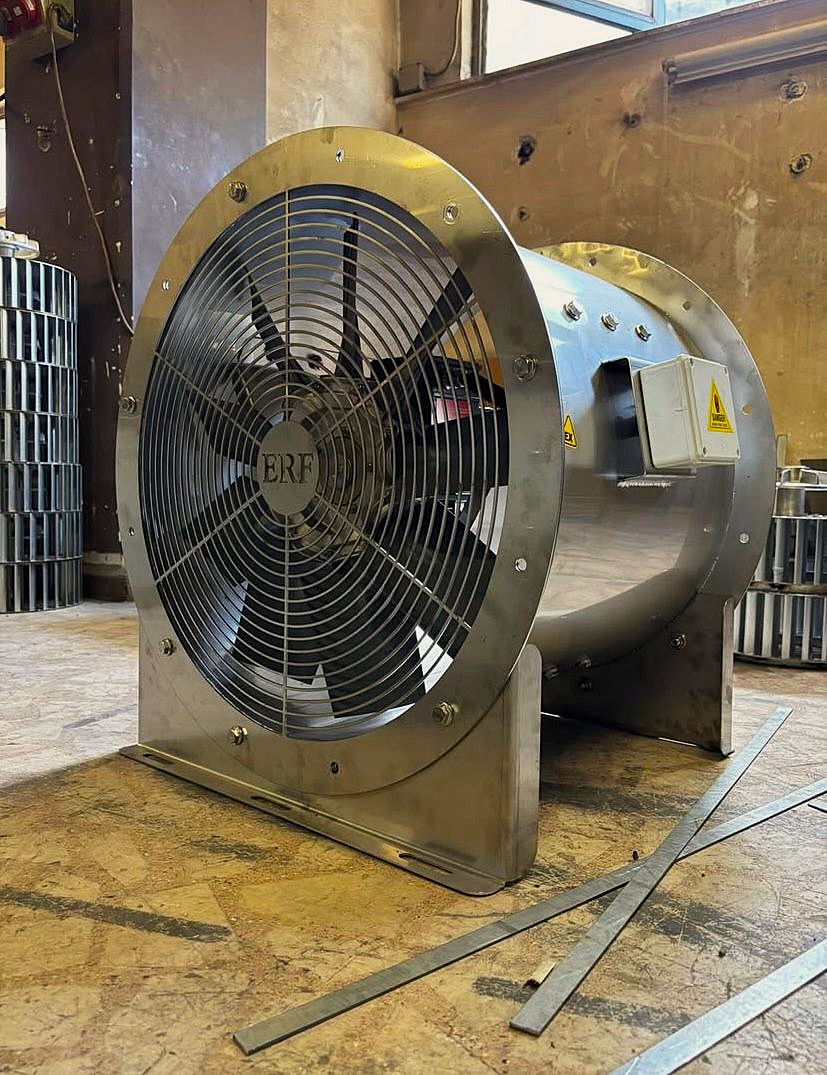
Used across a wide range of applications—from refineries to natural gas processing plants—these fans hold a vital position in ensuring process safety and energy efficiency. For this reason, it is essential to understand the types of industrial fans used in oil and gas applications, their areas of use in refineries and gas facilities, ATEX-compliant fan systems, and the key considerations when selecting the right fan.
As ERF Group, in this article, we aim to share our years of experience and professionalism to provide you with insights into safe, efficient, and ATEX-compliant fan solutions for the oil and gas industry, and to help you make the most accurate decisions in this field.
The oil and gas sector is one of the leading industries characterized by high-risk working environments, the presence of flammable and explosive gases, and demanding process conditions. Every detail in this sector is of critical importance. Industrial fans used in oil and gas applications carry even greater significance, as they differ from standard industrial fans.
These fans are specifically designed to withstand high temperatures, corrosive gases, and explosive atmospheres. The main types of fans used in the oil and gas industry include:
Radial Fans
Radial fans are frequently preferred in applications that require high pressure. They are widely used in process exhaust and gas handling systems, and are particularly ideal for flue gas extraction and chemical vapor suction.
Axial Fans
Axial fans are highly suitable for high-flow, low-pressure applications. They are commonly used in general ventilation, offshore platform air circulation, and cooling systems.
ATEX Fan Systems
These are specially designed fans used in explosive atmospheres. They are manufactured with anti-static structures and materials that minimize the risk of sparks. In oil and gas facilities, they are indispensable for both safety and operational efficiency.
Gas-Tight Fan Systems
These fan systems are designed with specially sealed casings to prevent the leakage of hazardous gases. They are particularly preferred in gas processing units and provide significant advantages in ensuring safe operation.
The oil and gas industry is one of the most prominent industrial sectors today, and the application areas of industrial fans within this field are quite extensive. It is important to note that every stage of the process requires controlled airflow and effective gas evacuation.
Key application areas in the oil and gas industry include:
If you would like to learn more about these applications and explore energy-efficient fan solutions, you can contact ERF Group for detailed information and expert support tailored to your specific needs.
Selecting a fan in the oil and gas industry involves much more than simply calculating airflow and pressure. Achieving efficient and reliable solutions requires a detailed and precise engineering analysis.
One of the most critical factors is ATEX compliance , which must be evaluated based on the classification of the explosive environment to ensure the fan meets all relevant ATEX directives.
In addition, material selection plays a crucial role. Fans should be manufactured from stainless steel or special alloys to withstand harsh operating conditions. Other key technical criteria include:
The main objective of considering these criteria is to ensure proper determination of the operating temperature range, prevention of gas leaks, correct evaluation of motor protection options, and accurate execution of process engineering calculations.
Energy costs represent a significant expense in the oil and gas sector, which is why efficiency is a top priority in fan systems. Several key factors play a crucial role in improving energy efficiency.
High-efficiency motors help reduce energy consumption, while aerodynamic blade designs deliver high performance with lower power usage. In addition, frequency converters (VFDs) contribute to energy savings by optimizing fan speed according to process requirements. Lastly, proper system integration not only provides cost advantages but also supports sustainability goals by reducing carbon emissions.
Based on these energy efficiency benefits, if you would like to access detailed information about these advanced fan solutions and explore the most suitable options for your operations, you can contact ERF Group through this website. With our expert team and professional manufacturing approach, we offer fast, high-quality, and reliable fan systems tailored to the oil and gas industry.
This way, you can benefit from ATEX-compliant fan systems designed with spark-minimizing materials, specialized motor protections, and anti-static structures—ensuring maximum safety in oil and gas facilities. At the same time, you can achieve long-lasting performance and take full advantage of the efficiency, reliability, and operational benefits these systems provide.


